
Cone gardening helps you grow more food in small spaces. Enjoy easy harvesting, cleaner crops, and a neat, productive garden—perfect for balconies or patios.
After two years of growing vegetables conventionally in my small kitchen garden, I wanted to increase my yields, but my garden could not accommodate more plants. Then a friend introduced me to cone gardening, an unconventional growing method I had never thought of, and that’s when I realized the best way is not always to expand a garden outward, but upward.
I was reluctant to consider the technique at first, but then I decided to try it as a test to save space. Not long after, it became one of the most reasonable and productive projects that I have ever started in my garden.
What Is a Cone Garden?
A cone garden is a garden for growing plants upwards that’s in the shape of a cone. This structure has circular partitions that separate the soil in each compartment, from the largest bottom compartment to the smallest top compartment. It looks like a tiered cake!
Instead of growing plants in an open field or on a large garden bed, cones allow gardeners to grow more plants, even in the tiniest of spaces, by making the most of vertical space.
If you’re a gardener with a small backyard, balcony or patio, this growing method can bring a real difference to your gardening experience.
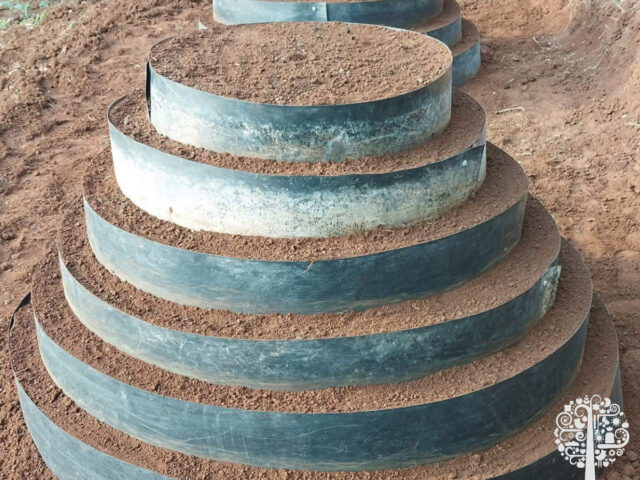
The Benefits That Won Me Over
It Saved Space
This was, far and large, the major benefit. A space that usually held very few crops surprisingly accommodated many dozens of the same crops.
Easy Harvesting
With the cone garden, I could even harvest my vegetables while standing since most plants are elevated. This was a notable change from the conventional method, where I would have to bend over to pick my vegetables.
Neat Garden
The raised model helped keep my crops cleaner, as there was less splashing when watering or in rain. Also, weeds seemed to grow less than in the previous conventional method. beds.
Improved Air Flow
The vertical cultivation of crops made it easier for air to flow freely between the plants, thereby reducing fungal problems, as fungus thrives in moist, congested environments.
Cost-effective Materials
Building a cone garden is quite economical because you can use recycled materials like old fertilizer bags, used sacks or feed bags, or even old plastic containers, which you can cut and shape into a cone.
You may also use metal sheets, polythene paper, or old tires of different sizes. What I used was a polythene paper of medium thickness supported with stakes to make a frame that partitions the soil.
I then mixed soil from my garden with compost and well-rotted manure to boost the soil’s fertility. That was all I needed to start me off. Compost helps the soil retain moisture longer and loosens it, allowing roots to grow more easily.
Water Management
In this method, you’ll likely notice a quick loss of water in the topmost tier as it flows downward. This is because of the cone’s vertical structure, which is governed by the law of gravity. To solve this hydration problem, you’ll have to water steadily and deeply. Also, what worked for me was mixing my garden soil with compost to improve the soil’s ability to retain water longer.
Mulching will also help to prevent the moisture from evaporating under extreme heat. When you’re growing your plants in the cone garden, it is also advisable to place plants that don’t need much water in the upper tier, and vice versa.
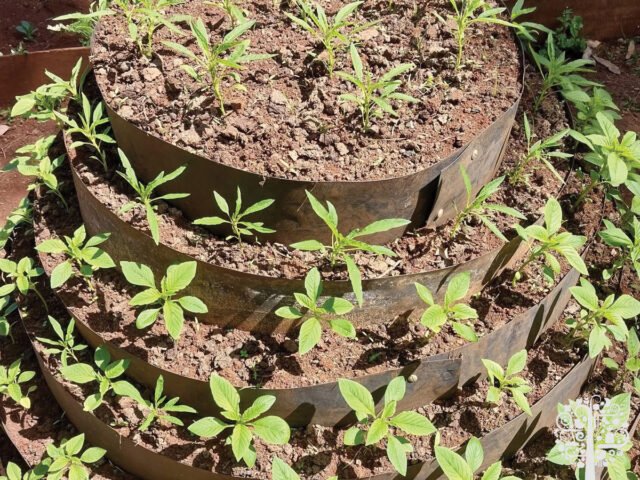
Crops that Did Well in My Cone Garden
One of the loveliest surprises I discovered when I constructed my cone garden was how many crops thrived in this growing technique.
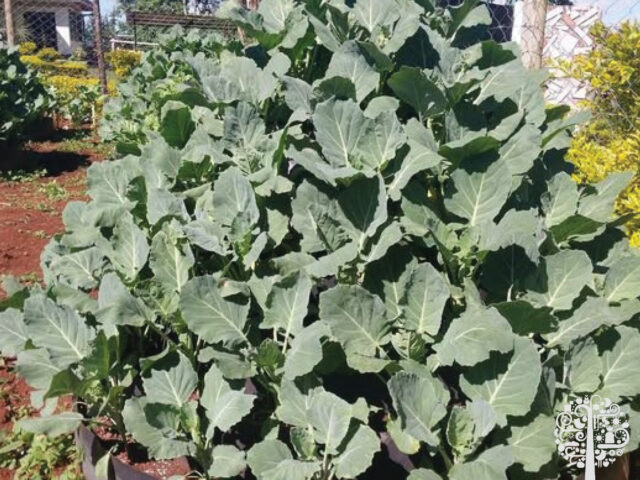
Leafy vegetables like kale, lettuce, Swiss chard and spinach were a great start to my cone garden because they have shallow roots.
Herbs also did remarkably well. Some herbs that have earned a permanent place in my cone garden are basil, parsley, mint and coriander.
I am planning to try strawberries, chili peppers, and spring onions to see how well they adapt to life in the cone.
Tips for Cone Gardening Success
Here are some practices you can consider to make your cone gardening experience even more fulfilling:
- Compact plants like spinach, lettuce, spring onions, and herbs are a great start for your cone.
- Crops do better in rich soil, so add ample quantities of manure.
- Adequate sunlight is important for your plants, even in the cone.
- Harvest frequently to promote new growth.
- Grow both herbs and vegetables; it makes your cone visually appealing.
- Try a variety of crops to identify those that perform best.
If done correctly, cone gardening is a simple but worthwhile growing method.
Who Would Benefit Most from this Method?
If you’re seeking to increase production in a limited space, whether in a garden or in an exterior enclosure of your house, this is for you. Cone gardens work well for balcony gardeners, urban dwellers with small gardens, learning institutions, or community gardens. It is also suitable for people with difficulty bending or kneeling.
Would I Recommend Cone Gardens?
Most definitely.
This method has transformed my thinking about innovation and technology in gardening. Sometimes you don’t require advanced skills to transform your gardening experience. Also, whenever you run short of space, look up; there’s always sufficient room to grow.
Trending Products

Ahopegarden Hydroponics Growing Sys...

Ahopegarden Hydroponics Growing Sys...

CYBSDF hydroponic-Growing-Kits-and-...

Hydroponics Growing System Kit 12Po...

Hydroponics Growing System Kit Indo...

BN-LINK 8 Outlet Surge Protector wi...

Light-Blocking Cube Caps Compatible...

SKINNYBUNNY Rockwool Cubes 1 inch, ...

Reusable Plant Support Clips for Ga...
